
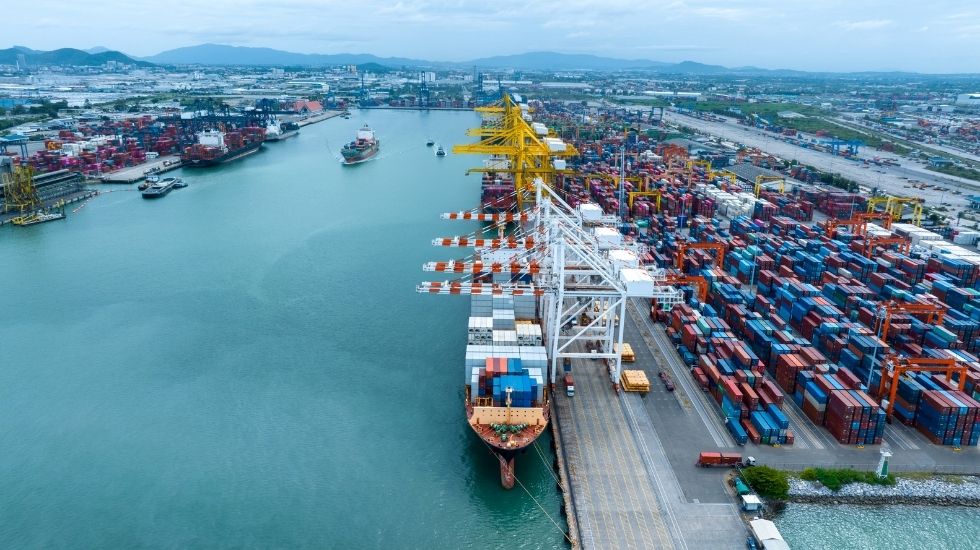
Sea freight documents are the paperwork that moves a shipment through carriers, ports, and customs. Get them right and cargo flows. Get them wrong and the consequences are measurable: delays at port, demurrage charges, refused cargo, payment disputes, or customs penalties. Around 95% of UK imports and exports travel by sea (Statista, UK Department for Transport), so documentation sits at the centre of most UK operations.
This guide explains the sea freight documents UK businesses need, what each one does, and where errors most commonly occur. It covers the four document groups every shipment involves: commercial, transport, customs, and special cargo, along with the Incoterms 2020 framework and how to assemble a clean document pack.
Key takeaways
Sea freight documents fall into four groups: commercial, transport, customs, and special cargo. Every standard shipment requires at least the first three.
The Bill of Lading is the central transport document, acting as the contract of carriage, receipt for goods, and, in negotiable form, document of title.
UK importers and exporters must file customs declarations via the Customs Declaration Service (CDS) for all international shipments, including EU trade post-Brexit. An EORI number is required before any declaration can be submitted.
Errors in commercial invoices, commodity codes, or B/L details are common causes of customs holds and demurrage. A forwarder or customs broker with integrated capability helps manage the full document pack.
What documents are needed for sea freight?
Sea freight requires documents across four categories. Commercial documents define the goods and the deal between buyer and seller. Transport documents govern the movement and control of cargo by the carrier. Customs documents satisfy export and import requirements. Special cargo documents cover regulated goods such as dangerous materials, plant-origin cargo, animal products, and timber packaging.
Most standard shipments require documents from the first three groups. Special cargo documents are only needed when the cargo category triggers them. A freight forwarder or customs broker typically coordinates the pack, but understanding each document helps you catch errors before they become expensive.
Commercial documents
Commercial documents define the transaction between exporter and importer. They describe the goods, agreed price, terms of sale, and any regulatory categories that apply. Issued by the seller, they form the basis for customs valuation, insurance, and payment.
Commercial invoice
A commercial invoice is issued by the seller to the buyer, detailing the goods sold, their value, currency, Incoterms, and the names and addresses of both parties. Customs authorities use it to calculate import duty and VAT, so it must be accurate. Errors in declared value, commodity description, or Incoterm are among the most common causes of customs delays and post-import audits.
Packing list
A packing list is issued by the seller and itemises the contents of each package or container, including dimensions, weights, and package count. The carrier, terminal, and customs authorities use it to verify that the physical cargo matches the commercial invoice. The invoice covers value and terms; the packing list covers the physical facts. Discrepancies between the two can trigger customs examination.
Letter of Credit
A Letter of Credit (L/C) is a payment instrument issued by the importer’s bank guaranteeing payment to the seller once specified document conditions are met, usually presentation of a conforming B/L, commercial invoice, and packing list. L/Cs are used where payment security is needed between parties without an established trading relationship. Requirements are strict: a single discrepancy can delay payment until corrected.
Transport documents
Transport documents govern the movement and control of cargo between the shipper and carrier. They define the contract of carriage, confirm receipt of goods, and, in the case of a negotiable Bill of Lading, determine who has title to the cargo. They are issued by the shipping line or, where a forwarder is involved, by the forwarder.
Bill of Lading
A Bill of Lading (B/L) is issued by the shipping line or by a freight forwarder as a House B/L. It performs three functions at once: contract of carriage, receipt confirming the carrier has received the goods as described, and document of title to the cargo. In negotiable form, the original B/L must be presented at destination to release the cargo, which means it carries commercial value and must be handled carefully.
| Document | Issued by | Governs | Key distinction |
| Master B/L | Shipping line | Contract between freight forwarder and shipping line | Used when a forwarder consolidates cargo. The forwarder is the named shipper on the Master B/L, not the cargo owner. |
| House B/L | Freight forwarder | Contract between cargo owner and freight forwarder | Issued to the importer by the forwarder. It is the cargo owner’s title and controls release at destination. |
| Sea waybill | Shipping line or freight forwarder | Contract of carriage and receipt, but not title | Non-negotiable. Cargo is released to the named consignee without presenting an original document. |
Original B/L vs telex release
An original B/L must be presented at destination to release cargo. A telex release allows the shipper to surrender the original B/L at origin, authorising the line to release cargo to the named consignee without the physical document. Telex releases are common where buyer and seller have a trusted relationship. If the original B/L is still in transit when cargo arrives, or if document release is not planned around shipping transit times, demurrage can accrue before delivery.
What customs documents do UK importers and exporters need post-Brexit?
UK businesses require formal customs declarations for all international sea freight shipments, including EU trade post-Brexit, filed electronically via CDS. The key requirements are an active EORI number, the import or export customs declaration, certificate of origin where relevant, and supporting commercial documents.
EORI number
An Economic Operators Registration and Identification (EORI) number is required by any UK business importing or exporting goods internationally. It must be in place before a customs declaration can be filed and applies to EU as well as non-EU routes post-Brexit. UK EORI numbers begin with GB, and registration is managed by HMRC via gov.uk.
Customs Declaration Service (CDS)
The Customs Declaration Service is the HMRC system through which UK import and export declarations are filed, replacing CHIEF. Declarations require commodity codes from the UK Global Tariff, declared values, Incoterms, and the EORI number. Commodity code errors are particularly consequential because they determine duty rate and any import licensing or prohibition requirements.
Certificate of origin
A certificate of origin declares the country in which goods were manufactured or substantially produced. It is required where origin affects the applicable duty rate, particularly when claiming preferential tariff treatment under a UK free trade agreement. Not all shipments require one, but it is regularly needed for goods moving under UK trade agreements with the EU, Japan, Canada, Australia, and others.
Deferment account
A duty deferment account allows importers to defer payment of import duty, VAT, and excise duty to a single monthly payment rather than settling per shipment. This improves cash flow for regular importers and reduces administrative burden at the port. Deferment accounts are approved by HMRC and may require a guarantee or waiver based on financial standing.
What documents are needed for special cargo categories?
Certain cargo categories require extra documentation above the standard commercial, transport, and customs documents. These are mandatory where they apply and cannot be omitted.
Dangerous goods declaration (DGD). Required for cargo classified as dangerous under the International Maritime Dangerous Goods (IMDG) Code. It must be completed by the shipper and include the correct classification, packing group, and UN number.
Material Safety Data Sheet (MSDS / SDS). Required alongside a DGD for hazardous chemicals, providing substance properties, handling requirements, and emergency response information. It must match the cargo declaration.
ISPM 15 certificate or mark. Required for wood packaging material such as pallets, crates, and dunnage. Non-compliant packaging can be refused at entry.
Phytosanitary certificate. Required for plant-origin goods such as fresh produce, seeds, and plant material, certifying that cargo has been inspected and is free from quarantine pests and diseases.
Health certificates. Required for animal-origin goods including meat, fish, dairy, and animal products, certifying that cargo meets food safety and animal health requirements.
Incoterms 2020 and how to assemble a clean document pack
Incoterms 2020 are the internationally recognised trade terms published by the International Chamber of Commerce. They define whether buyer or seller is responsible for transport, insurance, export customs, and import customs at each stage of a shipment. Common UK sea freight terms include FOB, CIF, EXW, and DDP. The term agreed in the sales contract determines which documents each party must produce, pay for, and provide.
A clean document pack for a standard sea freight import should include:
- Commercial invoice, with values matching the packing list and B/L description.
- Packing list, with physical details matching the invoice.
- Bill of Lading or sea waybill, with accurate consignee and notify party details.
- UK import customs declaration via CDS, with commodity codes verified.
- Active EORI number.
- Certificate of origin where preferential tariff treatment is claimed.
- DGD, MSDS, ISPM 15, phytosanitary, or health certificates where required.
- Deferment account number if applicable.
Frequently asked questions
What is the difference between a commercial invoice and a packing list?
A commercial invoice records the financial and contractual details of the transaction: what was sold, at what price, under which terms, and between which parties. A packing list records the physical facts: what is in each package, in what quantities, and at what dimensions and weight. Both are issued by the seller and required for customs, but the invoice drives duty calculation and the packing list supports physical verification.
What is the difference between a Master Bill of Lading and a House Bill of Lading?
A Master B/L is issued by the shipping line to the freight forwarder as the named shipper, covering the vessel movement. A House B/L is issued by the freight forwarder to the actual cargo owner. In consolidated LCL shipments, the forwarder issues House B/Ls to multiple shippers while holding one Master B/L with the shipping line. The House B/L is the document that controls release to the importer.
What is a sea waybill, and how is it different from a Bill of Lading?
A sea waybill is a non-negotiable transport document. It serves as the contract of carriage and receipt for goods, but not as a document of title. Unlike an original B/L, it does not need to be physically presented at destination. Cargo is released to the named consignee, making it suitable for established trading partners where payment security is not a concern.
What is an EORI number and who needs one?
An EORI number is the unique identifier required by any business importing or exporting goods internationally from or to the UK, including EU trade post-Brexit. HMRC requires it before any customs declaration can be filed. UK EORI numbers begin with GB and are obtained through HMRC.
What is the Customs Declaration Service?
The Customs Declaration Service is the HMRC platform through which UK import and export declarations are submitted. Declarations require commodity codes, declared values, Incoterms, EORI numbers, and supporting commercial documents. Most UK businesses use a freight forwarder or specialist customs broker to submit CDS declarations on their behalf.
Keeping your paperwork from holding up your cargo
Sea freight documentation is not complicated once you understand the logic: commercial documents describe the deal, transport documents govern the movement, customs documents satisfy the regulator, and special-cargo documents cover regulated goods. The costliest errors usually sit in the commercial invoice, Bill of Lading, or customs declaration. For UK importers, post-Brexit customs mean full CDS declarations, EORI registration, and correct commodity codes are now standard requirements for all routes. Working with a forwarder or customs broker who manages the pack end to end is the most reliable way to keep paperwork from adding time and cost.
Speak to Uniserve about your sea freight documentation
Uniserve is the UK leading independent logistics and global trade management provider, part of GB Global. UniOcean is our end-to-end sea freight service, and our Customs Clearance and Compliance team handles document packs, CDS declarations, and customs brokerage for importers and exporters at major UK ports including Felixstowe, Southampton, and London Gateway.
If you would like to review your document pack for an upcoming shipment, understand your customs obligations, or discuss how we can support your sea freight operations end to end, visit our Customs Clearance or UniOcean pages, or get in touch directly.