
Commercial shipping and air freight operations are facing significant disruption following military strikes involving the United States, Israel and Iran – with knock-on effects now emerging across key global logistics corridors.
As the conflict entered its third day, multiple airlines suspended passenger and freighter services across parts of the Middle East airspace. Industry notifications received over the weekend indicate that flight restrictions are being applied on short notice and may change rapidly as security advisories evolve.
Reduced capacity on major Asia-Europe and Middle East lanes is expected to tighten available space and place upward pressure on air freight rates. Carriers may also implement short-notice schedule revisions and pricing adjustments in response to operational and security requirements.
Uniserve has received formal alerts from airlines operating in the region confirming ongoing flight limitations. The situation remains fluid and further updates are anticipated in the coming days.
Several of the world’s largest cargo hubs are located in the Gulf, meaning prolonged disruption could affect global supply chains. Airlines, including Emirates and Qatar Airways, have reportedly grounded or reduced operations from key hubs.
At sea, major carriers including Maersk, MSC and CMA CGM are understood to be pausing or rerouting selected services away from higher-risk transit areas, while DP World has resumed operations at Jebel Ali, with residual congestion and schedule adjustments expected as operations normalise.
Maritime risk levels in the Gulf region have increased following the establishment of a US maritime warning area covering the Persian Gulf, Gulf of Oman, North Arabian Sea and the Strait of Hormuz. Major ocean carriers are understood to be diverting vessels or instructing ships to seek shelter while monitoring the security environment.
On Sunday, MSC announced the suspension of new bookings for cargo destined for parts of the Middle East until further notice.
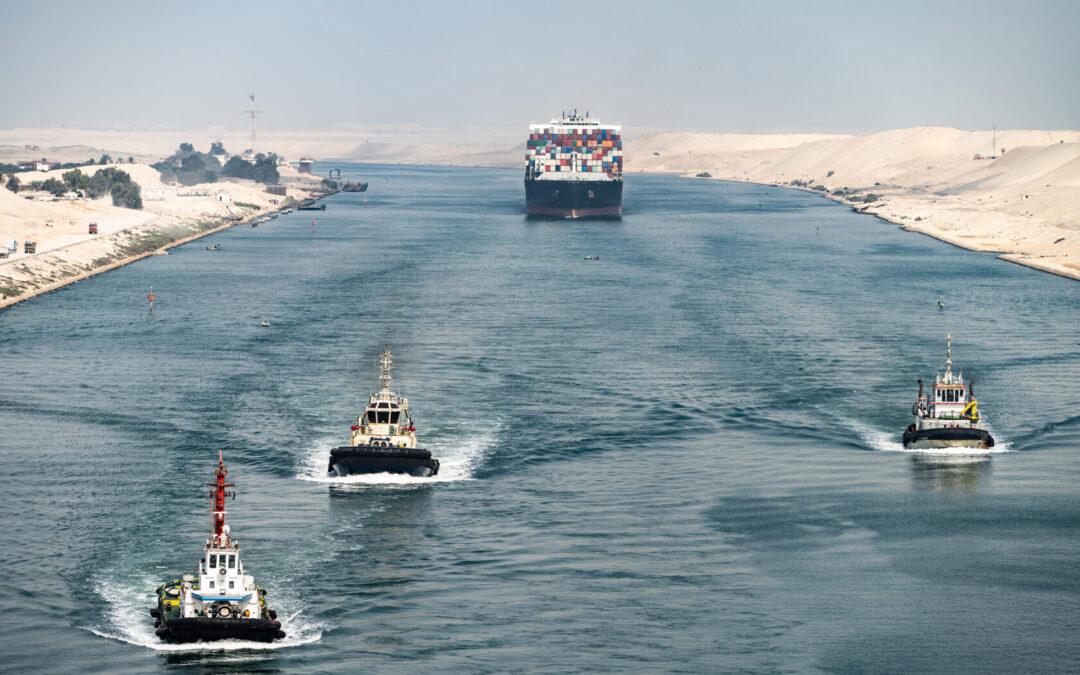
Similarly, Maersk has paused certain Red Sea and Suez Canal sailings amid concerns that escalation could affect key shipping lanes, with some services being rerouted via the Cape of Good Hope.
Analysts report that traffic at the entrance to the Strait of Hormuz has slowed significantly. Any sustained disruption in this corridor could have wider implications for energy and commodity flows, as a substantial share of global oil shipments transits the area.
There are also indications that Houthi groups in Yemen may resume attacks on commercial vessels in the Bab-el-Mandeb Strait, which would further increase transit risk and insurance exposure.
Marine and aviation war-risk premiums are expected to rise in the short term, particularly for movements linked to the Gulf region. This may lead to additional carrier surcharges and higher overall freight costs.
Our response and next steps
Uniserve, and teams from across GB Global, are liaising continuously with airlines, shipping lines, overseas offices and security advisers to assess operational impacts and alternative routing options. We are monitoring carrier notices, airspace restrictions and maritime security alerts on an ongoing basis.
Uniserve’s priority is to update you on the status of any of your orders in transit and to propose possible solutions at this stage. We will also keep you updated at regular intervals as circumstances change.
Further updates will be issued as verified information becomes available. Given the rapidly evolving situation, guidance may change at short notice.
For support or further information, please contact your Business Development Manager or the Client Development Team at: crmteam@ugroup.co.uk